
President’s Message: Our Comprehensive Take on the New State Budge
Chris Berleth Columbia Montour Chamber of Commerce CEO/President
By now, you’ve heard: Pennsylvania has a new state budget.
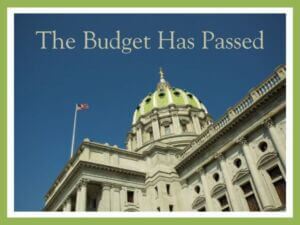
On July 12, the General Assembly completed work on the Commonwealth’s $50.8 billion spending plan for the 2026–27 fiscal year. While the budget was adopted after the July 1 start of the fiscal year, we are pleased that legislative leaders and the Governor reached an agreement and avoided a prolonged impasse.
The budget process is rarely straightforward. Competing political priorities, last-minute amendments, and pressure from organized interests can quickly reshape legislation—sometimes in ways that create serious unintended consequences for employers, nonprofits, and communities. The final agreement reflects the negotiation required to complete the budget, but it also demonstrates why close attention and rapid advocacy are often necessary until the final votes are cast.
The PA Chamber of Business and Industry led much of the statewide effort, while the Columbia Montour Chamber was actively engaged on issues with direct local consequences. Our legislators took seriously the concerns we brought before them.
Our most urgent concern involved proposed changes to Pennsylvania’s Educational Improvement Tax Credit program.
Legislation passed by the House would have ended the existing EITC and Opportunity Scholarship Tax Credit programs and replaced them with a substantially different structure. The proposal would have reduced the value of the tax benefit, restricted which students could benefit from scholarships, and imposed new limitations on how EITC funds could be used.
The Chamber mobilized quickly because the effects would have extended far beyond the political debate over school choice.
Educational Improvement Organizations use EITC contributions to support career exploration, workforce development, financial literacy, educational equipment, student experiences, and other programs delivered in partnership with local school districts.
Over the past decade, the Foundation of the Columbia Montour Chamber has translated more than $1 million in tax credits into programs, scholarships, equipment, and educational opportunities for local public-school students. Other nonprofits throughout our region also rely on EITC to provide services that schools and families value, which are innovative and supplement the curriculum at local public schools.
The proposed changes could have interrupted funding and placed significant new burdens on organizations already operating with limited staff and resources. We worked to ensure that lawmakers understood those local consequences, and they responded to our concerns.
Senator Lynda Schlegel Culver, chair of the Senate Education Committee, also told our Government Affairs Committee that she understood the strain the proposed legislation would have placed on community organizations.
We are grateful that the changes were excluded from the final budget and the existing EITC structure was preserved. We support reasonable transparency and accountability, but reforms should strengthen successful partnerships—not unintentionally dismantle them.
The Chamber was also engaged on childcare.
Employers across Columbia and Montour counties continue to identify the lack of accessible, affordable childcare as a direct workforce barrier. That is why the Columbia Montour Chamber joined a coalition of 81 local Chambers advocating for additional state investment in childcare.
The final budget includes a $5 million increase for the Child Care Worker Retention and Recruitment Program, which supports bonuses intended to help providers attract and retain employees.
Additional funding is welcome, but money alone will not solve the problem. We have also been working with Representatives Leadbeter and Stender and getting critical feedback from childcare directors about common sense reforms that would address regulatory burdens and duplicative requirements that increase costs for providers. We are watching a package of 14 House bills, expected to address some of those issues.
For employers, the budget also produced several encouraging tax-policy outcomes.
Pennsylvania’s previously enacted Corporate Net Income Tax reductions remain on schedule. The rate is expected to decline to 6.99 percent in January and continue phasing down toward 4.99 percent. Maintaining that commitment improves Pennsylvania’s competitiveness and sends an important signal to businesses deciding where to invest, expand, and create jobs.
We are equally pleased that mandatory combined reporting and a new tax on digital advertising were not included in the final agreement.
In the days leading up to budget passage, the PA Chamber and its local partners had to mobilize quickly as these provisions were added to legislation moving through the House. The proposed digital advertising tax alone was estimated to impose approximately $500 million in additional costs, with small businesses likely absorbing much of that burden through higher advertising prices.
For many local businesses, digital advertising is one of the most affordable ways to reach customers. Excluding both proposals avoided new costs and uncertainty for Pennsylvania employers.
The budget also includes investments in education, workforce development, and infrastructure.
Funding for career and technical education increased by approximately $10 million following a year without additional funding. Resources were also directed toward employer-led training through WEDnetPA, veteran employment initiatives, and scholarships designed to encourage graduates to live and work in Pennsylvania.
These investments reflect a principle that guides much of the Chamber’s work: workforce development does not begin when an employer posts a job opening.
The budget also authorizes the release of $500 million from the Motor License Fund during the current fiscal year and another $275 million the following year to accelerate shovel-ready road and bridge projects.
No broader solution for public transit funding was included, so transportation will remain part of the Chamber’s advocacy agenda. Locally, services such as StopHopper demonstrate how reliable transportation can connect residents with employment, healthcare, education, and essential services.
Significant fiscal questions also remain.
Pennsylvania continues to face an estimated structural deficit of approximately $4.5 billion. The current budget relies partly on delayed Medicaid payments, transfers from other state funds, and other one-time financial measures.
While those decisions allowed lawmakers to reach an agreement without increasing broad-based taxes or drawing from the Commonwealth’s nearly $8 billion Rainy Day Fund, the choice to delay Medicaid payments for an historic two months into the next budget means that we’ll be dealing with the consequences of this year’s bills long after the next fiscal year is over. If there’s any encouragement, it is that state revenues exceeded projections by approximately $1 billion during the previous fiscal year, reinforcing the value of policies that promote economic growth.
Summary
This budget includes several outcomes the Columbia Montour Chamber actively supported: preservation of EITC, additional childcare investment, the continued phase-down of the Corporate Net Income Tax, and the exclusion of combined reporting and the digital advertising tax. Those outcomes reflect coordinated advocacy among local Chambers, statewide partners, employers, nonprofits, educators, and public officials.
The Columbia Montour Chamber will continue to be part of that work—not simply reporting what happens in Harrisburg, but representing the interests of employers and communities in Columbia and Montour counties before the final decisions are made.